Interview with Lou Anne Colodny | Anita Sharma
Updated: 6 days ago
Hollywood, Florida
Anita Sharma: I want to start by thanking you for the opportunity to talk with you about your work and art practice in Miami. In addition to having a longstanding critical art practice, you have contributed immensely to the cultural landscape of South Florida. You were a founding Director of MoCA and more recently, you are the co-director of Under the Bridge in North Miami. Can you talk about these two experiences, what they meant to you and how they have contributed to your art practice?
Lou Anne Colodny: For over five decades, my work has been guided by two parallel commitments: creating provocative art and developing spaces that support artists and foster community.
In 1976, when the Metropolitan Museum in Coral Gables wanted a satellite in North Dade, I sprang on it. With the help of the members of the North Miami Society of the Arts and specifically, President Peggy Hurst, we approached the members of the City of North Miami Council with a proposition: the rental of the old water department building for $1.00 a year, and the City’s financial backing to establish a branch of the Metropolitan in our region. There were no art institutions north of Flagler at that time, so this was an opportunity that would enhance the community.
The Metropolitan was to present exhibitions and art classes and the city would renovate the building for its new purpose. The only stipulation the City requested was that the art classes be offered free to North Miami residents. In three months’ time, the City renovated the building and our first exhibition opened.
After three years, with advance notice that the Metropolitan was closing, several volunteers and I approached the City to continue the program. The City agreed to continue the operation of the museum, so Peggy Hurst, Richard Shack, and I decided to lead the development of the North Miami Museum and Art Center.
In 1981, we received a 501(c)(3) designation, established a 10-person Board of Trustees, and changed the Museum’s name to COCA, the Center of Contemporary Arts. I became its Director and created the mission to exhibit Florida artists. Programming was experimental and ideas for exhibitions were organic. I had no formal background to run a museum, so I was not beholden to create a space that was traditional in any way. Any exhibition idea that was suggested was considered for presentation as long as the quality was present. Artists suggested exhibitions, helped create activities, and COCA became a gathering place for dialogue and examination of the arts of our times. COCA presented over 80 exhibitions and its programming was extensive. With only 2,500 sq. ft. to operate in, it became evident that a larger facility was needed. In collaboration with the City, the Mayor, Mike Colodny, and Board Chairman Richard Shack, approached Congressman William Lehman to find Federal funding for the much needed new facility.
Groundbreaking was in 1993. On February 23, 1996, MoCA, at 23,000 square feet, was presented to the public. It was built on time and on budget. MoCA opened to critical acclaim for its community incentives, ambitious programming and contributions to the greater public.
MoCA has been the most ambitious creative project of my career.
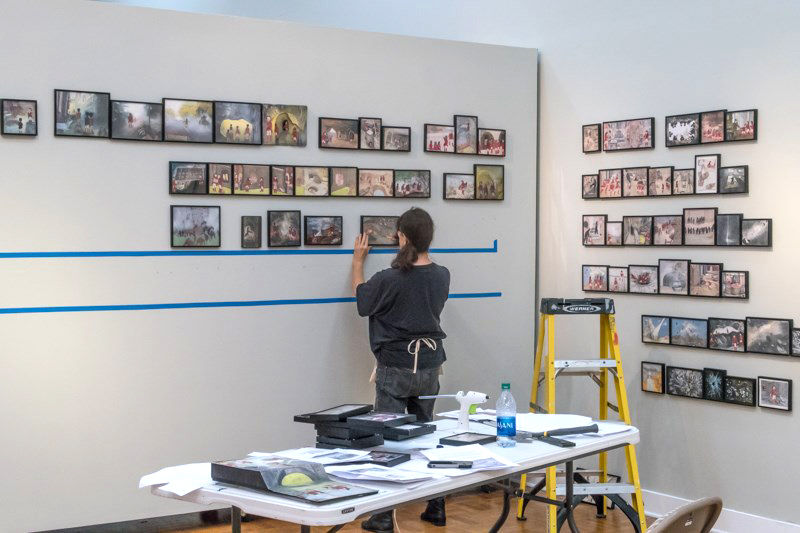
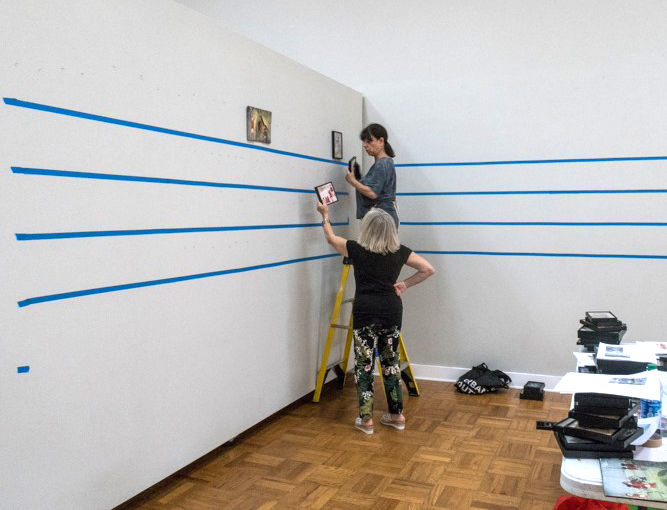
My commitment to supporting other artists remains strong. Fifteen years ago, I transformed half of my North Miami studio into "under the bridge art space," a free exhibition venue where I annually invite four under-recognized Florida artists to experiment, exhibit, and develop new work.
Looking back, I see my career as a continuous dialogue between artistic creation and cultural stewardship. Whether founding institutions, mentoring artists, or creating immersive works that observe contemporary issues, I have sought to integrate creativity with inquisitiveness, learning lessons from all whom I came into contact with during this journey.
Anita Sharma: Looking back, how have these experiences shaped your understanding of what it means to be both an artist and a cultural builder? In what ways have they influenced your own practice?
Lou Anne Colodny: Creativity has many facets. I first applied mine to being a cultural builder. Opportunities presented themselves and I enthusiastically embraced them. The building of MoCA was epic because I had no formal arts background. I was a volunteer who latched on to an opportunity and created – a museum. COCA/MOCA reached an audience of people not used to contemporary art and the ideas generated by it. So the community and I learned together. We had a small budget, a staff of a Director and part time secretary, volunteers and a paid arts professional who taught us to handle art and hang our exhibitions. Working with local artists first hand, talking with them about their philosophies of art making, the art system and Miami’s artistic community taught me valuable lessons – preparing me to develop my own guidelines when I moved on to personal art creativity.
The most insurmountable issue I personally faced when devoting my life to my own art was validation. People in the art world knew me as an Administrator and proponent of Artists. I had to convince them (and myself) that I was an artist. It didn’t affect my work but it was always in the back of my mind. I was creating and that was what mattered. After a year or two, a request for video submissions appeared on my computer. It announced that MoCA had developed a program called OPTIC NERVE and this was to be its first presentation. So I entered. And waited, and waited. And then – the selections were published and behold – I was selected. The program took place at MoCA and it was thrilling.
VALIDATION.
The need to create! Ah, that is the main thing. For me, it is a burning desire, a need. It is a compulsion – there is nothing like it – finding your “space” … being in the “now” of creation – that is tantalizing. A release happens – freedom enmeshes you – You are “in the zone.” Creation is magical and exhilarating. My artistic practice has grown and I have been fortunate to have been recognized with many grants, awards and exhibitions. Again, my experiences with artists had taught me patience, and the need to keep on creating and applying for grants and awards… persistence – was what I learned from so many. With the advent of under the bridge art space, my engagement and conversations with artists continues. It is rewarding to offer opportunities to those who “do not get grants, exhibitions, or the recognition they deserve. In some small way, I am helping the “creatives” whom I care about.
My journey has been shaped by an interplay between institutional building and creating my own art. They are intertwined and define what creativity is to me.
Anita Sharma: Video and multimedia have been central to your practice for decades. What first drew you to working with video, and how has your relationship with the medium evolved over time?
Lou Anne Colodny: As a child, growing up in Joplin, Missouri there were few cultural opportunities. My family, having come from Denver, realized the importance of culture on children and tried providing opportunities for us. So, photography and home movies became a kind of magic for me. I remember seeing my father developing film and my mom hand-coloring the resulting photos. When home movie cameras became a “thing” my father immediately bought one. Making home movies became part of weekend fun.
Having this fascination with film, I immediately turned to video as my primary material for art making. The videos were performative, using my own image and voice as a found object. I had spent my school years doing ballet and performing in plays. Understanding how the art world works, I didn’t want to compete with my art friends, so I worked in a medium none of them were using and began my journey. Knowing what I knew about the system, I knew I had to develop my own style and to be authentic.
Initially, the videos were very simple expressions of “change” and transformations. None were longer than 5 minutes. They were looped for exhibition and only had background music – no dialogue.
Gradually, I began telling stories in the videos and incorporating them into exhibitions of my other work. The defeated boxer in the exhibition “Other People’s Bodies” recounts her training and loss of a major fight in the video SMASHER. I filmed, performed and created a spontaneous monologue based on a year’s research into women and the reasons they box.
Animation always fascinated me, so using chalk drawing from the series “The Nature of Man” I explored the many methods involved. It was created on a Photoshop and Premiere platform and was a lengthy and laborious project. It was highly satisfying, again because there was a story to be told and using my own created art made it authentic.
The Duchampian idea of CHANCE entered my subconscious after I filmed my hands winding in and out of themselves. With Adobe Premiere open, I sat at the computer, closed my eyes and randomly pointed at the screen to determine what “effect” to use. My finger landed on “mirror.” I applied the effect on my video and altered the amount of mirroring by again closing my eyes and aimlessly moving the cursor. What emerged was a surreal version of “life.” The hands had transposed and taken on a humanistic appearance.
I began my career with video and now am a multi-media artist as merging ideas and materials is truly a “creative” process for me. I now use video mainly to document openings of exhibitions, and projects.
Anita Sharma: Your work often exists between documentation, performance, and social commentary. How do you think about that intersection?
Lou Anne Colodny: My life has been a constant intertwining of art, performance and social commentary. As I have stated elsewhere, none of it was intentional, it just presented itself. My course has been one of determination and of the drive to create; to interact with others on the same paths – and learn as much as possible.
I love taking an idea, building on it and seeing it come to fruition. I have been very blessed to be “in the right place at the right time.” It’s been my destiny.